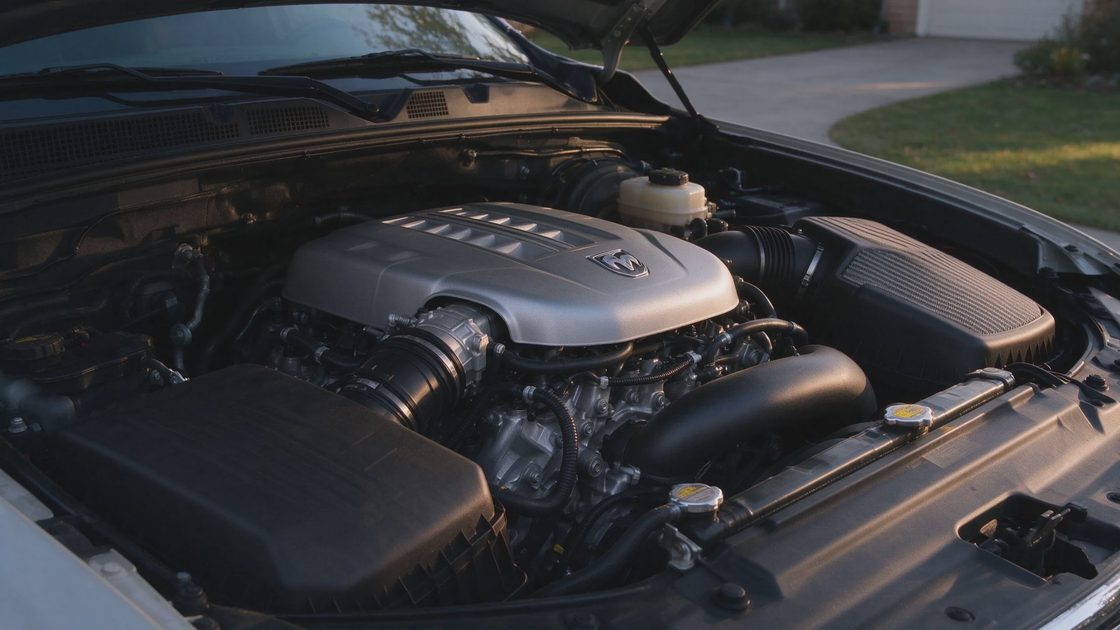
Hey folks, Mac here from the Ram Ownership Lab. If you spend time around truck stops or online forums lately, you know the atmosphere around Ram' s engine lineup is electric. Stellantis swapping the iconic 5.7L HEMI V8 for the new 3.0L Hurricane twin-turbo inline-six shook up the entire truck community. Running an independent shop here in Golden, Colorado, I see both sides every day. Buyers are torn between classic V8 rumble and modern forced-induction torque. Let' s strip away the emotional noise and look at real data, shop diagnostics, and mountain towing realities together.
The Powertrain Paradigm Shift in Modern American Pickups
For over twenty years, the naturally aspirated 5.7L HEMI V8 stood as the undisputed backbone of the Ram 1500 lineup. It earned fierce loyalty by delivering dependable horsepower, simple mechanical architecture, and an exhaust note that defined American pickup culture. However, shifting federal fuel economy regulations and changing buyer demands forced engineers to completely rethink light-duty truck power. Enter the 3.0L Hurricane Straight-Six Turbo, a clean-sheet design built to outperform traditional V8 engines while improving tailpipe emissions and overall efficiency across the board.
Transitioning from a large displacement V8 to a smaller, forced-induction inline engine hits hard for brand purists. The Hurricane comes in two distinct outputs: the Standard Output pushing 420 horsepower and 469 lb-ft of torque, and the High Output pushing 540 horsepower and 521 lb-ft. Comparing these numbers to the 5.7L HEMI's 395 horsepower and 410 lb-ft shows paper stats heavily favoring the twin-turbo setup. Yet peak numbers rarely reveal the full story of daily driving convenience and heavy-duty working conditions on real American highways.
Feature / Spec | 5.7L HEMI V8 eTorque | 3.0L Hurricane I6 (SO) | 3.0L Hurricane I6 (HO) |
Horsepower | 395 hp @ 5,600 RPM | 420 hp @ 5,200 RPM | 540 hp @ 5,700 RPM |
Peak Torque | 410 lb-ft @ 3,950 RPM | 469 lb-ft @ 3,500 RPM | 521 lb-ft @ 3,500 RPM |
Induction System | Naturally Aspirated | Twin Turbochargers | Twin Turbochargers |
Recommended Fuel | 89 Octane (Midgrade) | 87 Octane (Regular) | 91+ Octane (Premium) |
Understanding this mechanical shift requires examining how power is generated on the road. The naturally aspirated HEMI relies on engine displacement and RPM to build its torque curve, requiring downshifts on steep grades. The Hurricane uses small, low-inertia turbochargers to build boost almost instantly, providing peak torque lower in the RPM band. This fundamental difference alters how these trucks feel on the road, creating a sharp divide among experienced truck owners across the country today.
Low-End Torque and Mountain Towing Capability Tested
Living and testing trucks near Denver means high-elevation performance is never an abstract concept. When climbing Interstate 70 toward the Eisenhower Tunnel at over 11,000 feet, ambient air density drops significantly. Naturally aspirated engines like the 5.7L HEMI lose roughly 3% of their power for every 1,000 feet of elevation gain. By the time a classic HEMI reaches the Continental Divide, it loses nearly a third of its rated horsepower, forcing the 8-speed transmission to hunt for gears while keeping engine revs high.
Forced induction changes the high-altitude towing equation entirely. The twin turbochargers on the 3.0L Hurricane pack ambient air into the intake manifolds, compensating for thin mountain air and preserving sea-level torque curves. Towing a 7,000-pound travel trailer up steep mountain passes with the Hurricane engine feels effortless compared to the HEMI. The boost kicks in early, keeping engine speeds low while maintaining highway cruising speeds without sending temperatures soaring into the warning zones on your dashboard gauges.
However, towing efficiency under heavy load reveals a different story. While the Hurricane boasts superior EPA fuel estimates during unladen commutes, forced induction consumes fuel rapidly under heavy manifold pressure. When hauling heavy loads up steep grades, turbochargers require richer fuel mixtures to manage combustion temperatures and prevent pre-ignition. Owners who tow frequently across flat regions may notice marginal fuel savings, but mountain towing consumes gas quickly regardless of engine design.
Engine Sound, Exhaust Note, and Driving Character
We cannot discuss the Ram engine debate without addressing sensory experience and driver connection. The 5.7L HEMI V8 possesses an unmistakable exhaust note that truck enthusiasts love. The deep V8 rumble during cold starts and aggressive acceleration creates an emotional satisfaction that turbochargers struggle to replicate. For many long-time Ram buyers, the sound of a V8 engine remains deeply tied to the identity and appeal of owning an American pickup truck.
In contrast, the 3.0L Hurricane inline-six produces a completely different acoustic profile. It operates with smooth, quiet refinement, emitting a muted mechanical hum accompanied by soft turbocharger spooling up front. At highway cruising speeds, cabin noise levels in a Hurricane-powered Ram 1500 are noticeably lower than in older HEMI models. This hushed environment reduces driver fatigue on long cross-country road trips, making the truck feel more like a premium luxury SUV during daily commutes.
Driving dynamics also differ due to inline-six engine geometry. Straight-six engines inherently possess perfect primary and secondary mechanical balance, meaning pistons move in opposing pairs to cancel out internal vibrations. When idling in traffic or accelerating under heavy throttle, the Hurricane delivers linear, smooth power without the slight cross-plane V8 engine movement. Drivers seeking classic muscle-car personality may miss the HEMI, but those prioritizing quiet refinement often prefer the inline-six experience.
Maintenance Schedules, Shop Diagnostics, and Complexity
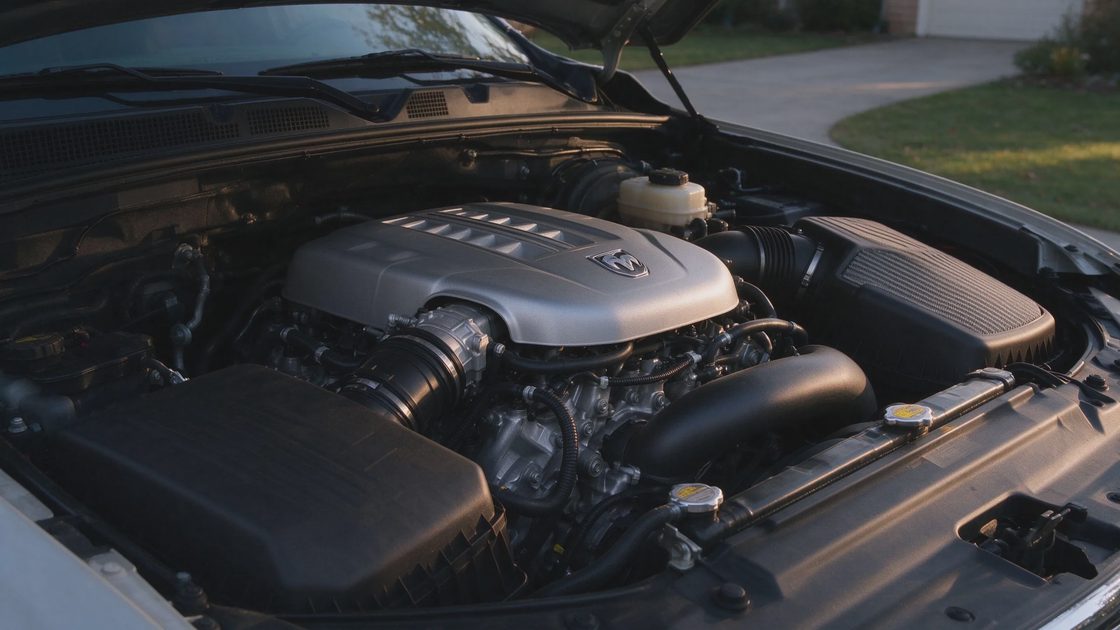
From an auto technician's perspective, engine bay complexity dictates long-temp repair bills and routine maintenance accessibility. The 5.7L HEMI V8 features a simple overhead valve pushrod architecture with a single camshaft inside the engine block. While replacing exhaust manifold bolts or servicing spark plugs requires labor, the underlying mechanical structure remains straightforward. Most independent repair shops across the United States possess decades of experience diagnosing and repairing HEMI engines quickly and affordably.
Conversely, the 3.0L Hurricane I6 utilizes dual overhead camshafts, direct gasoline injection, variable valve timing, and twin turbochargers integrated into liquid-cooled exhaust manifolds. This modern engineering design significantly increases component density inside the engine bay. Servicing fuel injectors, high-pressure fuel pumps, or turbocharger wastegate actuators requires specialized diagnostic tools and precise technical knowledge. Simple fixes often take more labor hours due to tight factory clearances under the hood.
Shop Diagnostic Comparison:
5.7L HEMI V8 (Pushrod Simplicity): Single Cam → High Mechanical Clearance → Simpler Diagnostic Access
3.0L Hurricane I6 (Modern DOHC): Twin Turbos → High Component Density → Specialized Diagnostic Tools Required
Thermal management represents another major engineering shift between these engines. The Hurricane uses a high-pressure direct-injection system operating above 5,000 PSI, alongside complex cooling circuits that regulate temperatures for the engine block, turbochargers, and charge-air coolers. Maintaining clean oil and fresh coolant is critical for dual-boosted engines. Skipping fluid maintenance on a Hurricane engine risks turbocharger bearing damage or carbon buildup on intake valves, making strict adherence to factory service intervals essential.
Fuel Economy Realities and Total Cost of Ownership
Fuel economy calculations for modern light-duty trucks extend beyond official sticker estimates published on new vehicle windows. The EPA rates the 3.0L Hurricane SO at a noticeable improvement over the outgoing 5.7L HEMI eTorque setup in combined city and highway driving conditions. During unladen daily commutes on flat terrain, the inline-six consumes less fuel by maintaining light load status, benefiting owners who use their trucks as primary family commuter vehicles.
However, fuel octane requirements alter the real-world operating cost equation dramatically. While the standard Hurricane engine operates on 87 octane regular unleaded fuel, maximizing its rated horsepower and torque figures requires midgrade or premium gasoline. The High Output Hurricane variant requires 91 octane or higher fuel for safe operation under heavy engine loads. When factoring in price spreads between regular and premium gasoline across gas stations, annual fuel savings with turbo engines can evaporate quickly.
Long-term ownership costs must account for routine maintenance parts and specialized mechanical care. Dual-turbocharged engines subject synthetic motor oil to intense thermal stress, making regular 5,000-mile oil changes non-negotiable for preserving turbo shaft bearings. While the 5.7L HEMI carries known potential maintenance issues like exhaust manifold bolt failures, its routine replacement parts remain inexpensive. Prospective buyers must balance initial fuel savings against potential maintenance requirements over 100,000 miles of driving.
Choosing the Right Engine for Your Garage
Deciding between the 5.7L HEMI V8 and the 3.0L Hurricane I6 ultimately comes down to your primary truck usage, regional driving terrain, and personal preferences. If you live at lower elevations, prioritize classic V8 exhaust note, plan to perform your own routine maintenance, and want a simple, proven powertrain for long-term ownership, seeking out a clean 5.7L HEMI V8 remains a smart decision. It is a legendary engine that has powered millions of work sites reliably.
On the other hand, if you regularly tow heavy trailers through mountain passes, appreciate whisper-quiet highway cruising, and want maximum low-end torque without stepping up to a heavy-duty 2500 truck, the 3.0L Hurricane inline-six is an impressive engineering achievement. It outperforms the HEMI in altitude capability, pass-through acceleration, and modern daily driving refinement. Know your towing numbers, evaluate your regional fuel prices, understand your maintenance commitments, and choose the powertrain that best fits your lifestyle.