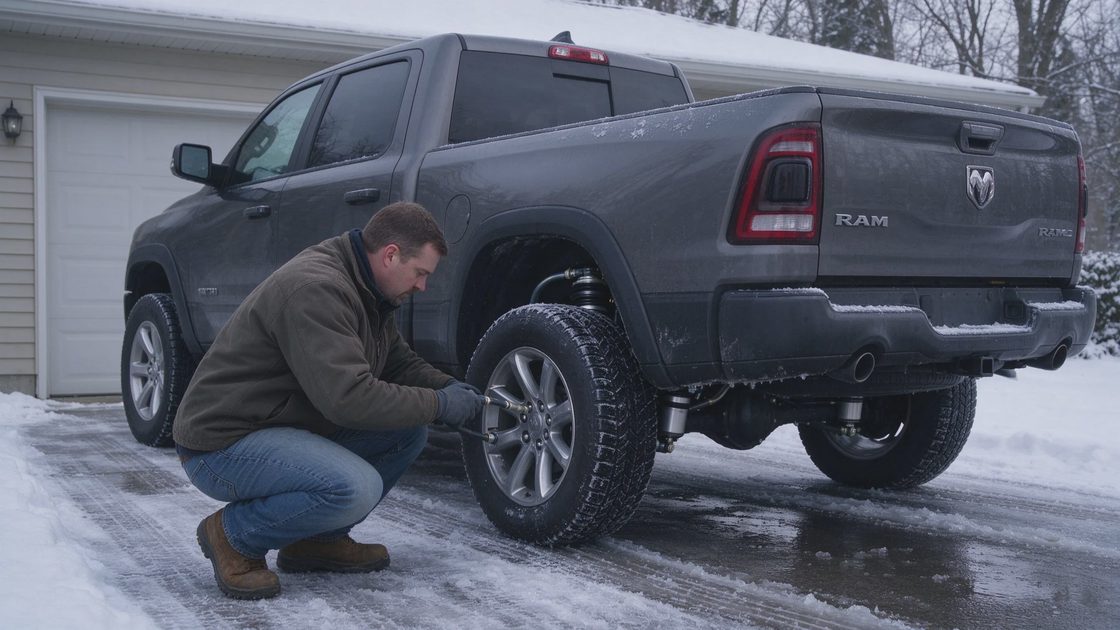
Mac here from Golden, Colorado. Winter in the Rocky Mountains brings cold temperatures that expose every hidden maintenance vulnerability in your truck. At my repair shop, as soon as freezing temperatures hit the Denver metro area, our phone starts ringing with Ram 1500 owners reporting air suspension problems. Their trucks are stuck in Park mode, riding hard on bump stops, or displaying a "Service Air Suspension System Immediately" warning light on the dash. Let's look at why these closed-loop air systems freeze up in winter and how you can fix them.
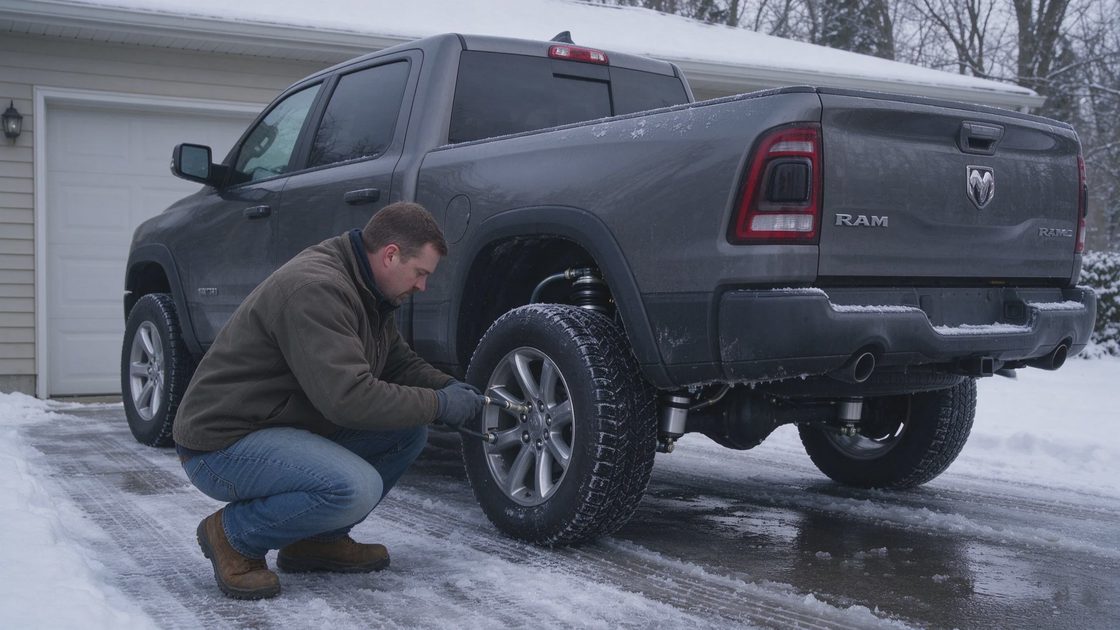
How Ram’s Closed-Loop Air Suspension System Operates
To diagnose cold-weather air suspension problems, you must first understand how Ram’s factory system is engineered. Unlike open-air suspension setups that draw in ambient outside air every time they raise the chassis, Ram utilizes a closed-loop system filled from the factory with dry nitrogen gas. This nitrogen charge is stored in dual reservoir tanks and moved between four corner air springs via a high-pressure compressor and an electronic valve block assembly.
Using inert nitrogen gas is supposed to prevent moisture accumulation inside the lines, keeping rubber air bladders flexible and internal solenoid valves moving freely in sub-zero temperatures. The system features five distinct height settings: Extended Entry/Exit (lowest stance), Normal Ride Height, Off-Road 1 (+1 inch), Off-Road 2 (+2 inches), and Aero Mode, which automatically lowers the chassis at highway speeds to reduce aerodynamic drag.
When operating correctly, Ram’s air suspension provides exceptional auto-leveling when pulling heavy trailers, smooth highway ride quality, and adaptable ground clearance for trail driving. However, as the vehicle ages over multiple winter cycles, seals begin to wear, allowing ambient moisture to seep past rubber O-rings and contaminate the internal nitrogen gas charge.
Root Causes of Winter Failure: Water Contamination and Frozen Valves
The primary enemy of Ram's air suspension in cold weather is water contamination inside the closed-loop system. Ambient moisture enters the system through tiny microscopic leaks in corner air spring fittings, worn compressor shaft seals, or compromised valve block O-rings. Once water vapor gets inside the high-pressure lines, freezing winter temperatures condense and freeze that moisture into solid ice crystals.
When water freezes inside the electronic valve block assembly, tiny solenoid valves become locked in place. If a valve freezes while stuck open or closed, the compressor cannot shift nitrogen gas between the storage tanks and corner air bladders. This leaves your truck frozen in its lowest Entry/Exit position, resting hard against internal rubber bump stops and delivering a harsh, bouncy ride down the highway.
Additionally, ice crystals can obstruct pressure sensors or puncture internal valve seats. When the main suspension control module detects that a corner air spring isn't responding to height adjustment commands, it enters a protective diagnostic fault mode. The computer disables the system, illuminates a service message on the instrument cluster, and prevents further height adjustments until system pressures normalize.
Compressor Overwork, Blown Fuses, and Burned Motors
When ice blocks nitrogen flow through the valve assembly, the suspension control module repeatedly signals the air compressor to run in an attempt to build line pressure. Because the frozen valve prevents air movement, the electric compressor operates continuously under high thermal strain. Operating continuously against high resistance causes the electric compressor motor to overheat rapidly.
To protect the wiring harness from thermal damage, the high-amperage air suspension fuse in the under-hood Power Distribution Center (PDC) will blow. A blown fuse immediately kills electrical power to the compressor unit, leaving the suspension completely inoperative. Drivers often replace the blown fuse, only to have the new fuse pop instantly because the underlying ice blockage remains inside the lines.
Symptom 1: Loud compressor running continuously under the bed without raising the truck.
Symptom 2: Instrument cluster displays "Service Air Suspension System Immediately."
Symptom 3: Blown 40A/50A air suspension fuse in the under-hood fuse box module.
If an owner continues driving with a frozen system, the electric compressor motor will eventually burn out its internal windings or score its piston cylinder walls. Replacing a burned-out air suspension compressor and valve block assembly at a repair shop can easily cost upwards of fifteen hundred dollars in parts and labor. Preventing system moisture accumulation before winter arrives is critical for avoiding these expensive repairs.

Emergency Winter Fixes: Thawing Out Your Frozen Air Suspension
If you wake up on a freezing morning and find your Ram 1500 resting on its bump stops with a frozen suspension, do not panic or force the compressor to run continuously. The fastest emergency fix is getting the vehicle into a heated space—such as a warm residential garage, a commercial parking structure, or a heated service bay—to thaw out frozen ice blockages inside the valve block and air lines naturally.
Once the truck sits in a heated environment above forty degrees Fahrenheit for two to three hours, ice crystals inside the valve block melt back into liquid water. Electrical solenoid valves regain free movement, and the compressor can resume moving air normally. After the system thaws out, clear any stored diagnostic trouble codes using a standard OBD-II scanner, and cycle through ride heights to verify normal operation.
If you must drive the truck while the suspension is stuck low, drive slowly and avoid sharp potholes. Operating a truck resting directly on its suspension bump stops delivers harsh impacts to frame mounts, steering linkages, and wheel bearings. Getting the vehicle thawed out promptly prevents secondary chassis damage and preserves internal air bladder seals.
Long-Term Prevention: Antifreeze Injections and System Bleeding
Preventing winter air suspension failures requires removing accumulated moisture and restoring a pure, dry nitrogen charge. For long-term reliability, independent repair shops use specialized diagnostic equipment to purge contaminated gas, evacuate moisture using a high-vacuum pump, and refill the system with pure 99.9% dry nitrogen gas charged to roughly 150 to 180 psi.
A popular, highly effective preventive measure used by cold-climate Ram owners involves injecting a small amount of specialized air brake antifreeze (such as Wabco or Haldex Air Brake Antifreeze) directly into the main pressure lines. Adding one to two ounces of air brake antifreeze into the system lowers the freezing point of any internal moisture, preventing ice crystals from forming inside the electronic valve block during extreme sub-zero cold snaps.
Step 1: Purge moist ambient air using a vacuum pump to clear internal lines.
Step 2: Inject 1-2 oz of specialized air brake antifreeze into main pressure fittings.
Step 3: Recharge system with pure 99.9% dry nitrogen gas to factory pressure specs.
Additionally, regularly inspecting rubber air spring bladders for dry rot cracks, cleaning road salt off height sensors, and spraying silicone lubricant on rubber seals helps preserve system integrity. Taking these preventive maintenance steps before winter arrives ensures your Ram's air suspension operates reliably throughout the coldest months of the year.
Mac’s Winter Air Suspension Verdict: Stay Warm and Stay Prepared
"Don't let a cold snap leave your Ram riding like an empty dump truck. Purge system moisture, inject air brake antifreeze before winter hits, and keep a spare compressor fuse in your glovebox."
Ram’s active air suspension system delivers exceptional ride comfort and auto-leveling trailer performance when properly maintained. However, sub-zero winter temperatures quickly expose moisture contamination inside closed-loop nitrogen lines. By understanding how frozen valves lock up the system, taking preventive steps to purge water vapor, and using air brake antifreeze treatments, you ensure your suspension operates smoothly all winter long. Stay warm, maintain your truck, and keep the shiny side up.